On-site weld repair without a shutdown
Pulse Technology Hub
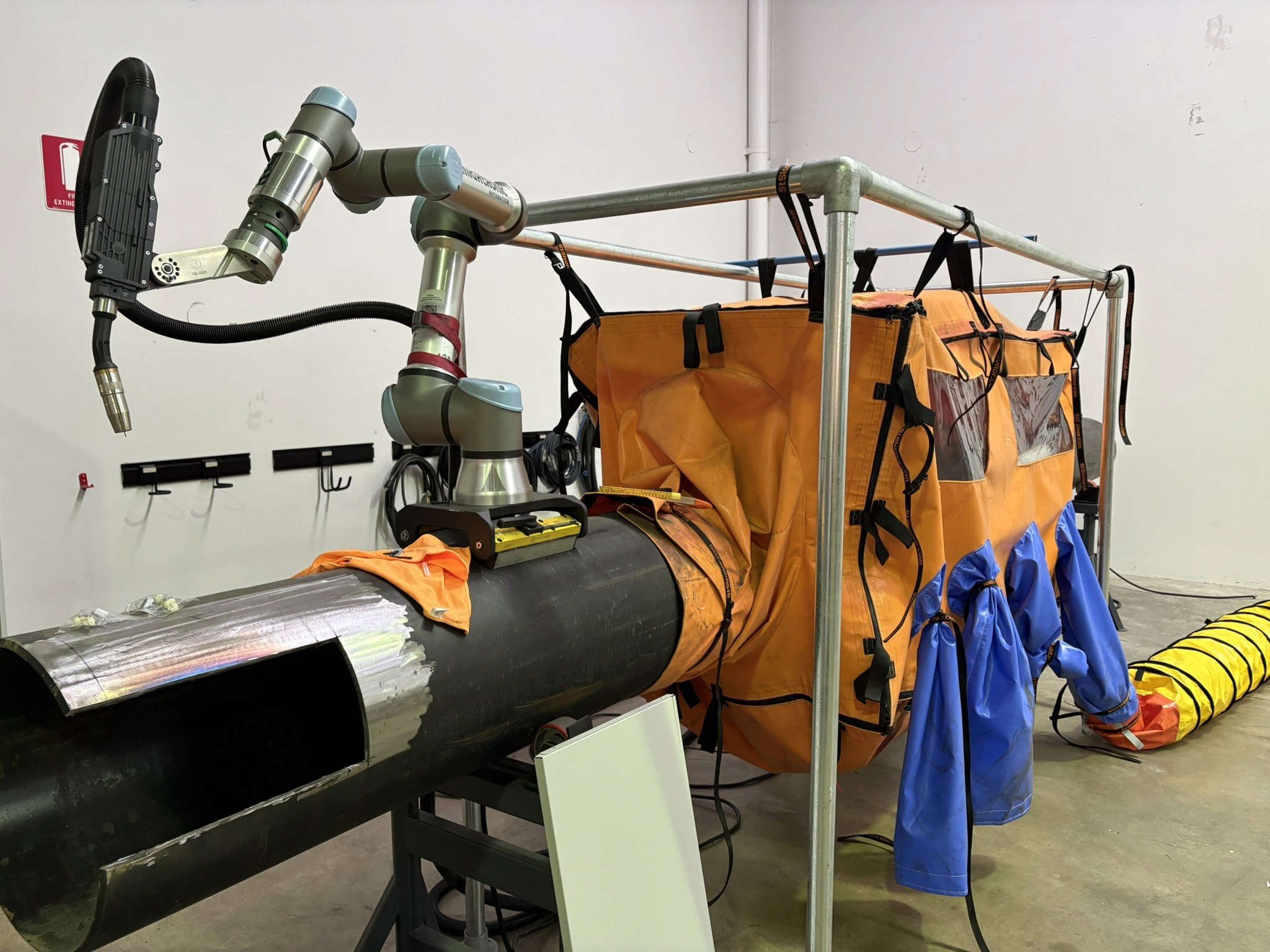
The cost of a weld repair on an operating asset is rarely the weld itself. It is the shutdown, the scaffold, and the personnel exposure around it, or the cost of removing the component and sending it off site. Effee OSR does the weld in place with a robot, and in many cases on-stream, while the asset keeps running. The system performs weld build-ups, cladding, and repairs, supported by induction heating for preheat and post-weld treatment and laser cleaning for surface preparation. For an operator, the question Effee changes is whether a given repair has to mean lost production at all.
Why the shutdown costs more than the weld
On a live asset, a weld repair usually triggers an outage window, isolation, scaffolding, and a confined-space or hot-work permit regime. The weld itself may take hours. The surrounding scope takes days. On-stream repair removes the outage from that equation, which is where the real cost sits.
What the robot actually does
Effee runs robot-controlled welding for build-ups, cladding, and repairs, carried out directly on the component rather than after removing it. The robotics hold a consistent weld where hand work on a live, awkwardly positioned asset cannot. Effee also brings induction heating for preheat and post-weld heat treatment, which is more local and controllable than gas or trace heating, and laser cleaning that strips corrosion without abrasive blasting.
Repair instead of replace
Effee's core case is repairing and upgrading a component rather than replacing it. When the replacement carries a long lead time, repair keeps the asset in service and avoids both the procurement and the deferral. That is also where the emissions and material savings sit, but the operational driver is availability.
A real repair: a golden weld on an Equinor platform
Equinor brought Effee in to repair a heat exchanger on one of its platforms. Corrosion had required the replacement of two 20-inch flanges, the internal corrosion-resistant cladding had worn off, and rewelding was needed to a golden weld standard, meaning a weld that cannot be pressure tested before it goes into service and therefore has to be right first time. The robots performed the work, which also kept people out of the immediate hazard during the weld.
What the robotics maturity looks like
This is not a concept. Effee completed its first robotic welding project in 2020, its first pressure-vessel weld in 2021, and its first offshore operation using 3D laser the following year, which enabled 3D-printed robotic weld build-ups on site. The company sits within a group with a long background in induction heating and welding technology.
What this means for a WA operator
For a WA operator, the relevant test is the recurring repair that currently forces a shutdown or carries a long component lead time: a corroded flange, worn internal cladding, a pressure-vessel internal repair. Effee's question is whether that repair can be done on-stream, in place, by a robot, which turns an outage into a planned intervention.
Common Questions
Can you repair a weld on an asset without shutting it down?
In many cases, yes. Effee carries out robot-controlled welding on-stream, in place on the component, which removes the outage that drives most of the cost of a weld repair on a live asset.
What is a golden weld?
A golden weld is one that cannot be pressure tested after completion before the asset returns to service, so it has to be right first time. Effee performed a golden weld for Equinor when rewelding two 20-inch flanges on a platform heat exchanger.
What can robotic on-site welding actually do?
It performs weld build-ups, cladding, and repairs directly on the component, supported by induction heating for preheat and post-weld treatment and laser cleaning for surface preparation. It can also produce 3D-printed weld build-ups on site.
Why repair a component instead of replacing it?
Replacement often carries a long lead time and a procurement cost, and it can defer the work. Repairing in place keeps the asset in service, which is usually the larger operational gain.
Has Effee done offshore work?
Yes. Effee repaired a heat exchanger on an Equinor platform, and it carried out its first offshore operation using 3D laser within about two years of starting robotic welding.
What is induction heating used for in weld repair?
Induction heating provides local, controllable preheat and post-weld heat treatment. It is faster and more precise than gas or trace heating, with better heat and cooling control.
Does robotic welding improve safety?
It keeps people out of the immediate weld hazard during the operation, which lowers the exposure that comes with hand welding on a live asset in confined or elevated positions.
The Hub is open to operational and technical leaders in the energy and resources sector. Visit pulsetechnologyhub.com.au or email connect@pulsetechnologyhub.com.au to arrange a visit.

Perth CBD, Western Australia