Subsea pipeline inspection without removing the coating
Pulse Technology Hub
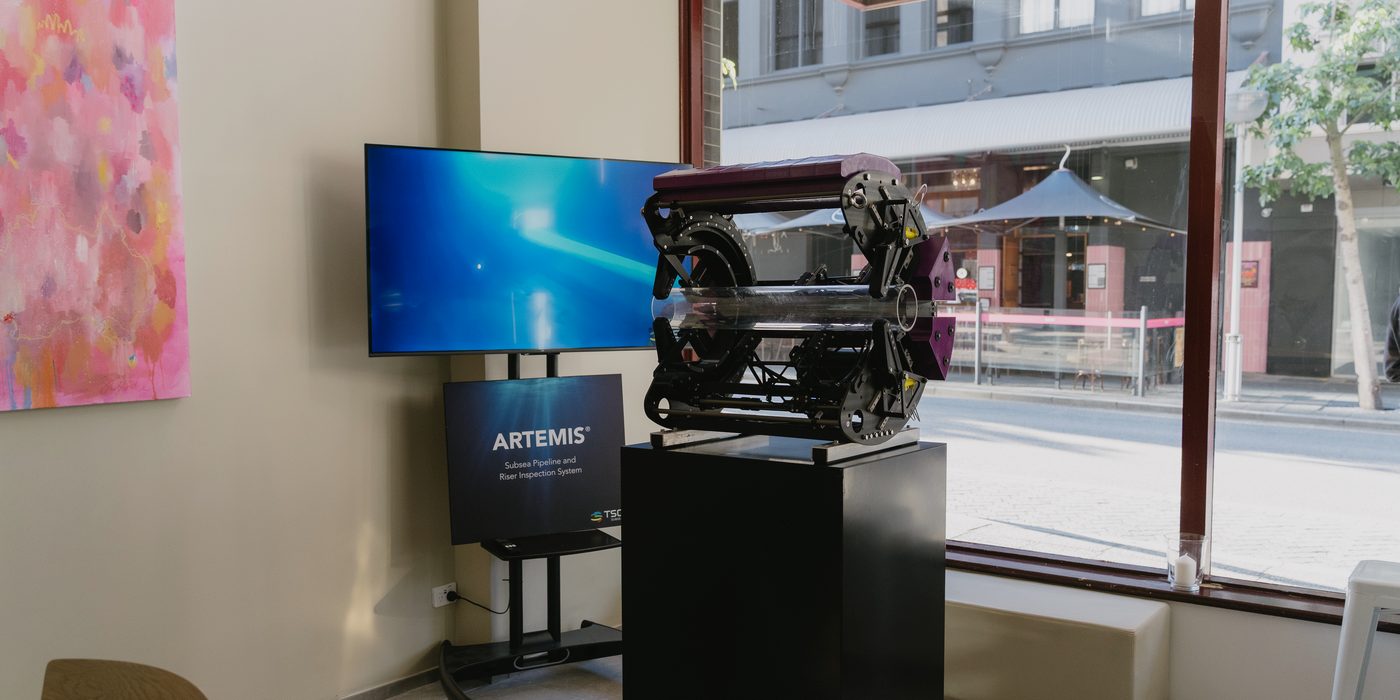
A large share of subsea pipelines and risers cannot be inspected by an in-line pig, and the conventional alternative means sending divers or an ROV to cut back the coating before anything can be measured. TSC Subsea's ARTEMIS removes that step. It is an ROV-deployed system that uses Acoustic Resonance Technology to measure remaining wall thickness through the coating, including attenuative coatings thicker than 100mm, with depth sizing to around 0.2mm. For an operator, that means a direct wall thickness reading taken in place, with no field joint cutback and no divers. The result is the data a subsea integrity decision needs, collected at a fraction of the scope a coating-removal campaign requires.
Why so many subsea lines cannot be inspected the usual way
In-line inspection tools run inside the pipe and need the right traps, bore, and flow to do it. Many subsea flowlines and flexible risers are unpiggable, so the only option is external inspection. External inspection through a thick coating is the hard part, because most external methods cannot read wall thickness through coating, so the coating has to come off first.
What Acoustic Resonance Technology actually measures
ART sends an acoustic signal into the pipe wall and reads the resonance to calculate remaining wall thickness directly. It works through attenuative coatings thicker than 100mm and holds depth sizing to around 0.2mm. It also identifies whether wall loss sits on the inside or the outside of the pipe, which is the distinction that decides whether the cause is internal corrosion or external damage.
Why reading through the coating changes the cost
Coating removal is the expensive, slow, and integrity-sensitive part of a subsea inspection campaign. Cutting back a field joint coating and reinstating it adds ROV or diver time, generates debris, and creates a new coating repair to manage. Reading through the coating removes all of that, so the inspection is the measurement rather than the measurement plus a coating project.
How it is deployed
ARTEMIS is mounted on and deployed by a work-class ROV, so it does not need divers. It gives full coverage around the pipe and works across a diameter range from roughly 150mm to 890mm, which covers most flowlines, pipelines, and rigid or flexible risers. The vCompact version was built for tight-access field joints where the standard tool cannot fit.
Where it has run in Australian waters
TSC developed the vCompact specifically for a Beach Energy project in the Bass Strait, inspecting a 20-inch line near the Thylacine A platform where the field joints could only be reached through a narrow access window. TSC has more than 10 years of deployments from the splash zone to ultra-deepwater, with a wider robotic portfolio including MagCrawler and HullScanner for structures and hulls.
What this means for a WA subsea integrity programme
For an operator with ageing subsea infrastructure, the recurring question is the real remaining wall thickness on lines that cannot be pigged. ARTEMIS answers it without a coating-removal campaign and without divers, which changes both the cost and the schedule of a life extension case. The line's condition becomes a measurement you can take, not a project you have to fund first.
Common Questions
Can you measure subsea pipeline wall thickness without removing the coating?
Yes. Acoustic Resonance Technology reads through attenuative coatings thicker than 100mm and measures remaining wall thickness directly, with depth sizing to around 0.2mm, so no coating removal is needed.
How do you inspect an unpiggable subsea pipeline?
Unpiggable lines are inspected externally. ARTEMIS is deployed by a work-class ROV and takes wall thickness readings on the outside of the pipe, which removes the need for an in-line tool or divers.
What is Acoustic Resonance Technology?
ART is an acoustic method that measures remaining wall thickness directly through coatings. It also distinguishes whether wall loss is on the inside or the outside of the pipe, which changes the integrity diagnosis.
Does ARTEMIS need divers?
No. ARTEMIS is deployed by a work-class ROV, so the inspection is carried out without putting divers in the water.
What pipe sizes can ARTEMIS inspect?
ARTEMIS works across a diameter range from roughly 150mm to 890mm, covering pipelines, flowlines, and rigid and flexible risers. The vCompact version handles tight-access field joints.
Has ARTEMIS been used in Australia?
Yes. TSC developed the vCompact for a Beach Energy project in the Bass Strait, inspecting a 20-inch line near the Thylacine A platform through a narrow access window.
Why does it matter whether wall loss is internal or external?
The location of the loss tells you the mechanism. Internal loss points to internal corrosion or erosion, external loss points to coating failure or external damage, and the two lead to different integrity responses. ART distinguishes them in the same reading.
The Hub is open to operational and technical leaders in the energy and resources sector. Visit pulsetechnologyhub.com.au or email connect@pulsetechnologyhub.com.au to arrange a visit.

Perth CBD, Western Australia